Furthering WAZA in Sustainability: Biodiversity Impact and Buying Power
Author: Catherine Barton, Policy Lead Deforestation-Free Commodities and Regenerative Agriculture at Chester Zoo
The story behind palm oil and zoos
“What on earth is a zoo doing at a palm oil conference? Don’t you just feed animals?”
These were the words I heard from a delegate 15 years ago when I attended my first Roundtable on Sustainable Palm Oil (RSPO) conference, and it’s stuck with me. I’m delighted to say this viewpoint has since changed considerably, and the role of the zoos and aquarium sector in sustainable palm oil is now recognised as so significant by the palm oil sector that we are seen as one of the key stakeholders in the conversation. Our role in this space spans across the supply chain; our species and conservation work with field projects in oil palm producer countries; and our role as both buyers and conservation educators within zoos and aquariums at the buying end of the supply chain. This is one area where we can truly merge our wildlife expertise with behaviour change in our, and our visitors’, buying habits.
The recognition of our sector in this space has been down to the dedication and work of numerous colleagues at various zoos and aquariums across the globe and WAZA membership, and fortunately, in this community we all like to collaborate and have achieved greater impact because of this.
In 2017, WAZA and RSPO signed the first MOU, aiming to work collaboratively together to support sustainable palm oil. This year, the WAZA Conservation and Environmental Sustainability Committee (CESC) have renewed this MOU, effective through to 2028, building on the original foundation to strengthen a shared vision to protect wildlife habitats, and supporting market transformation toward sustainability. Along with a continuous and renewed focus on biodiversity, we’ll aim to further mobilise our own community and their visitors to drive change through responsible sourcing.
We of course had to be realists in this conversation. We know that demand globally means a boycott would have limited to no impact hence our continued support for sustainable palm oil. However, the conservation issues are still alive in the rainforest habitats of the world. We still have wildlife populations declining and habitat fragmentation to fix. We’re still not seeing landscape scale solutions, and we’re not yet seeing nature at the heart of climate strategies in this sector.
This means that sustainability can’t stand still. There should be constant evaluation and improvement of sustainability standards to safeguard biodiversity. As a community, if we truly want to save species, we must speak out with our scientific evidence and knowledge, and lead by example in our own buying and purchasing.
WAZA representation at RSPO
For this reason, alongside the MOU, WAZA now also represents the global zoo and aquarium community on the RSPO alternate Board of Governors, and I’m delighted to take up this opportunity to represent WAZA. This role is fundamental to ensuring that the people at board level represent all critical stakeholders in the conversation, of which zoos are one of them. Embracing our global responsibility and using our scientific expertise, we can help to drive change in this community, ensuring environmental and social responsibility, and integrity.
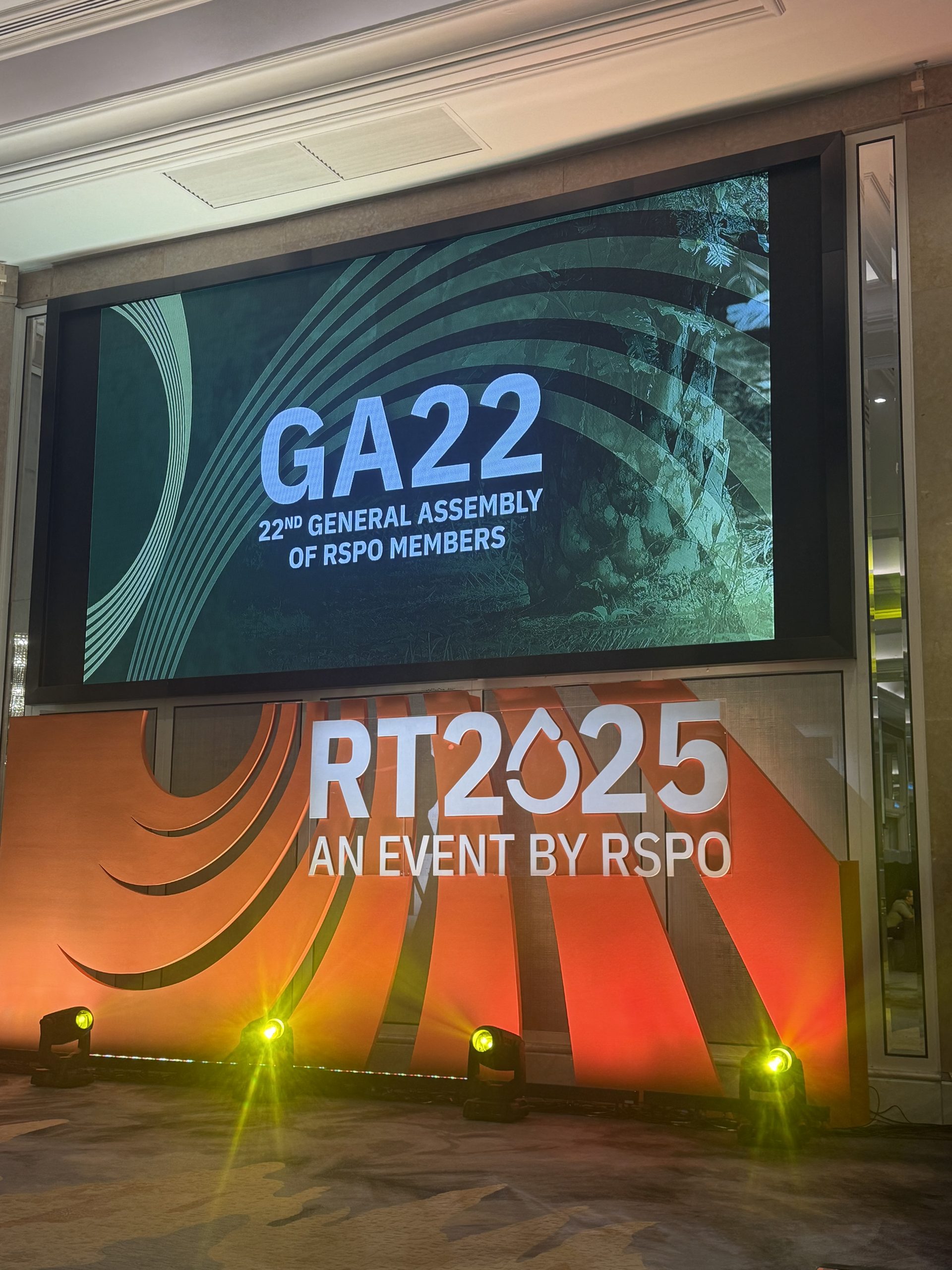
In November, the annual RSPO Roundtable (RT2025) took place in Kuala Lumpur, where three days of conference, voting and focus on ‘Building the Next 20 years’ took place. There’s nothing truer than “every day’s a school day” when it comes to a conference like this. With all sectors well represented, hearing from smallholder farmers on their struggles to sell their certified sustainable palm oil, and the frustrations from industry about a sector which is way above the standards of other sustainable commodities, yet still has negative connotations for consumers, means you can’t help but leave with a renewed sense of knowledge, ideas and determination to move the sector forward.
This year’s conference saw a renewed focus on driving forward demand in consumer countries which aren’t supporting certified sustainable production to the full. 20% of palm oil grown globally is certified by the RSPO, and this figure has stagnated over the last five years. The sector needs to see a renewed push towards sustainability standards globally. One shocking fact that I picked up this year was that if multinational companies within the RSPO sourced sustainably across their whole supply chain, and not just in countries demanding sustainability, then that 20% could rise to 40-50%! This is staggering. We know that the largest markets for palm oil are concentrated in Asia, and so our global voice here is more important than ever to turn the tide. Through the WAZA PalmOil Scan app, we focus on parent company scores to ensure that companies are scored based on their global supply chain, and not just let off the hook and scored highly for using a small amount of sustainable palm oil in their European stock.
Global change is the only way we’ll see sector wide progress, supporting both small holder growers on the ground to be compensated for doing the right thing, and having the necessary impact on climate and nature. As a working group under the WAZA Conservation and Environmental Sustainability Committee (CESC), we’re keen to further the reach of the PalmOil Scan app by bringing more countries on board. If you’re interested in hosting the app for your country to work with us and help make these necessary changes for wildlife, please do reach out to WAZA!
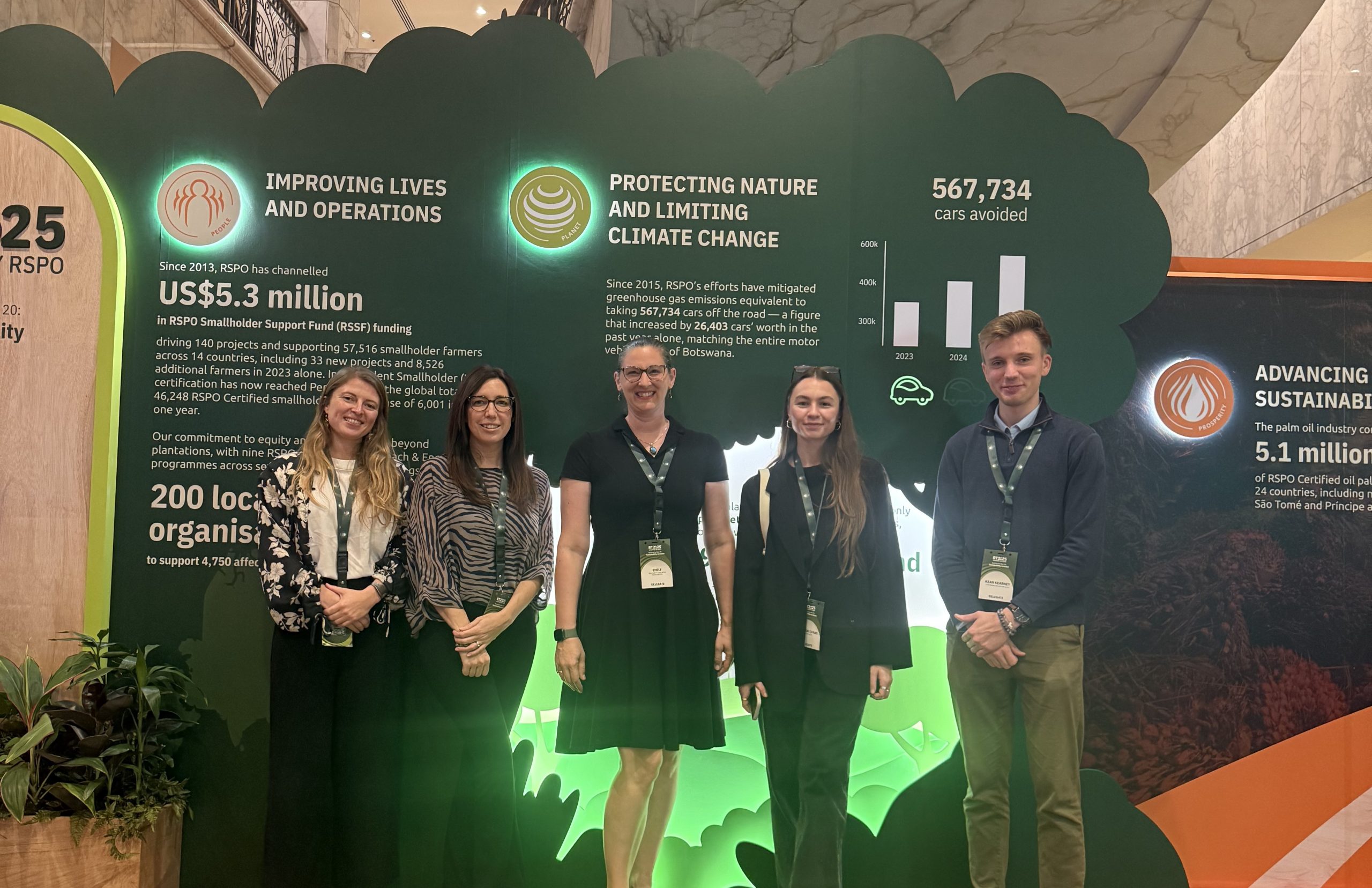
As luck would have it, collaboration runs through all of our palm work in the zoo sector and I wasn’t alone at the RSPO RT2025. We pulled together the zoo and aquarium community participants at the conference so you can hear directly from them about the conference, the work that our sector do and our hope for wildlife in the future.
“This was my first time attending the RT and I definitely came away motivated by how much shared ambition there is to advance responsible practices in palm oil landscapes. It was particularly encouraging to see a clear focus on the involvement of smallholders and I hope this collective momentum will support continued progress in integrating biodiversity considerations across RSPO standards” – Eleanor Evans, Chester Zoo
“At RT2025, I witnessed first-hand how many parties, from all different sectors of the sustainable palm oil industry, are working towards the shared mission of the RSPO and how PalmOil Scan proves pivotal in connecting consumers to RSPO member efforts. PalmOil Scan and zoos in general are absolutely invaluable as educational resources for the promotion of certified sustainable palm oil and providing a foundational understanding of why RSPO sustainable palm oil is a force for good which will help secure the longevity of the RSPO’s efforts. I return from the RSPO conference emboldened and steadfast in my passion for their mission.” Kean Kearney, Cheyenne Mountain Zoo
“It was useful to once again see RSPO members across the industry and civil society come together to discuss sustainability in the palm oil industry, and we joined some productive discussions about how we can continue pushing for progress. We hope to see increasingly strengthened representation from the Zoos and other NGOs in this space, so we can collectively engage to support the wildlife and people living within palm oil landscapes. Greater representation and participation from smallholders, financial sector and downstream actors will also be important to continued progress.” Eleanor Spencer, ZSL
“I find the best thing for me to do at the RT is to listen and learn. Being with people in person from all the sectors involved in the industry helps me to gain context and understanding of the complex issues surrounding palm oil in a way that I just simply cannot do otherwise.
This year specifically, I left with a better understanding of how the RSPO currently functions as well as a great deal of opportunities for further collaboration. I will do a zoo-wide staff and volunteer update with new information, and one of the things I absolutely love about our Zoo is that all I have to do is provide updates and everyone takes that information and uses it to work towards our collective sustainable palm oil goals, both at our Zoo and through our conservation field work worldwide.” Emily Bowling, St Louis Zoo
If you are interested in helping bring the WAZA PalmOil Scan app to your country, please get in touch with the WAZA Palm Oil Task Force.
The World Association of Zoos and Aquariums (WAZA) is the global alliance of regional associations, national federations, zoos and aquariums, dedicated to the care and conservation of animals and their habitats around the world.