CITES CoP20 Outcomes: Strengthening Wildlife Trade Policies for a Sustainable Future
By Loïs Lelanchon, Head of Partnerships and Advocacy, WAZA
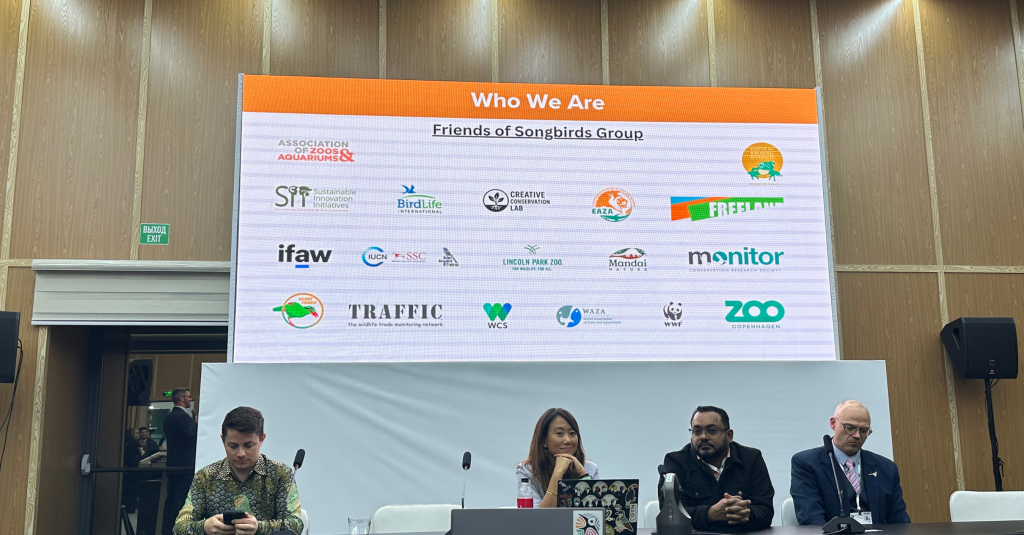
From 24 November to 5 December 2025, WAZA – alongside several of our Association and Institution members – took part in the 20th meeting of the Conference of the Parties to CITES (CoP20) in Samarkand, Uzbekistan. Our presence at this landmark gathering was rooted in a long-standing commitment to ensuring that global conservation policy reflects the scientific, practical, and ethical realities of caring for some of the world’s most threatened species. As representatives of the global zoo and aquarium community, we sought to bring forward the expertise of institutions on the front lines of species recovery, rescue and rehabilitation, and long-term population management.
CoP20 was a consequential meeting for global wildlife conservation. Nearly 90 fauna species will now benefit from newly established or strengthened international trade regulations, an essential step in ensuring that global trade does not compromise their survival. Many of these decisions have direct implications for the daily work of zoos and aquariums, underscoring the importance of our sector’s participation in international policy dialogues.
Strengthening Protection: CITES Appendix I Listings
One of the most significant outcomes of CoP20 was the transfer or inclusion of a diverse group of species into CITES Appendix I, the Convention’s highest level of protection. Species listed in Appendix I are considered to be in the gravest danger of extinction, and international trade in specimens taken from the wild is effectively prohibited, allowed only under exceptional circumstances such as scientific research.
This year’s decisions to list species in CITES Appendix I spanned an impressive range of taxa. Among mammals, the okapi and the Golden-bellied mangabey received upgraded protection, an important recognition of the growing threats posed by habitat loss and exploitation. Several bird species were also added to Appendix I, including the White-backed Vulture, Rüppell’s Vulture, and the Great-billed Seed Finch, all of which are struggling due to rapid population declines.
Reptiles gained particular attention at CoP20. Species such as the Hispaniolan Giant Galliwasp, the Galápagos Marine Iguana, all species of Galápagos Land Iguanas, and the Bale Mountains and Ethiopian Mountain Adders were included due to their vulnerability. Home’s Hinged-backed Tortoise was also added, a much-needed measure given pressures from illegal trade.
Aquatic species received similarly strong protections. The oceanic whitetip shark, whale shark, and Mobulidae rays, iconic yet highly threatened marine species, were all transferred to or included in Appendix I. This action places the strictest possible controls on their international trade, supporting global efforts to halt population declines and protect marine biodiversity.
Regulating Trade Through CITES Appendix II
While Appendix I focuses on species at immediate risk of extinction, Appendix II aims to prevent species from becoming threatened by uncontrolled trade. At CoP20, Parties agreed on several important Appendix II listings and transfers that will regulate international trade while allowing for sustainable, well-managed use.
Among mammals, the Dorcas Gazelle, Striped Hyaena, and both Linnaeus’s and Hoffmann’s Two-toed Sloths were included in Appendix II, an important step given that growing demand for live animals has placed pressure on wild populations.
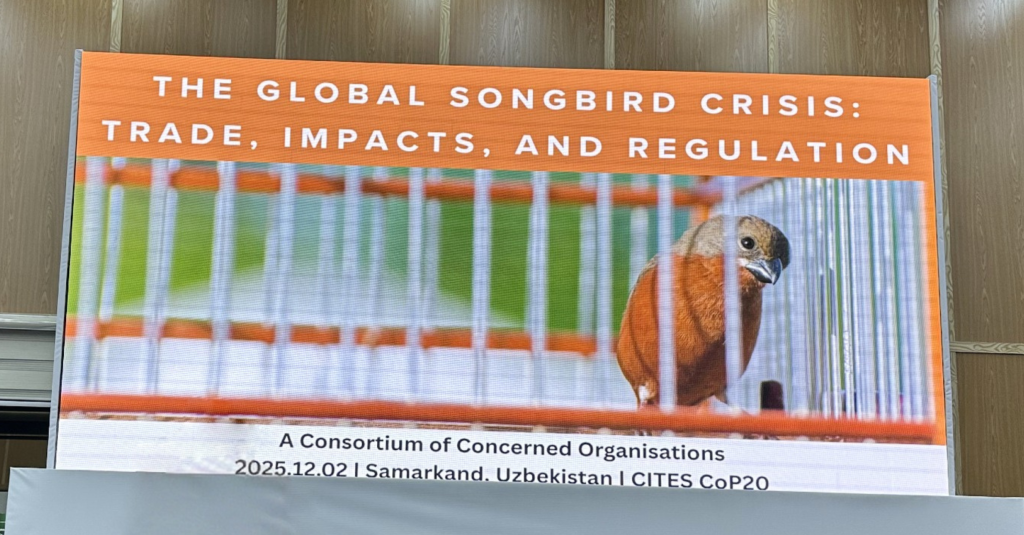
Birds also saw expanded protections, with African hornbills and four Sporophila songbird species added. These birds face increasing threats from illegal capture for the pet trade.
New Appendix II reptile listings included the Mount Elliot Leaf-tailed Gecko and the Ringed Thin-tail Gecko. Amphibian conservation was advanced through the listing of four Pelophylax frog species.
Several aquatic species were also included, such as the School Shark, Mustelus spp., Centrophoridae spp., and the Golden Sandfish, a sea cucumber species traded for the seafood market. Additionally, a zero annual export quota was introduced for wild-caught Glaucostegus spp. and Rhinidae spp. (wedgefishes), strengthening existing protections by prohibiting commercial trade from wild populations. Invertebrates were also represented, with the Rose Hair Tarantula added to Appendix II.
Decreasing or Removing Protection: When Conservation Succeeds or Species Are Lost
CoP20 also addressed species whose conservation status has changed significantly. In a rare conservation success story, the Bontebok was removed from Appendix II due to its remarkable recovery, a testament to sustained protection and population management efforts.
Conversely, the Caribbean Monk Seal was removed from Appendix I because the species is now officially extinct, with the last confirmed sighting in 1952. Its deletion serves as a somber reminder of what is lost when conservation action comes too late.
The Guadalupe Fur Seal, whose population has grown considerably in recent decades, was downlisted from Appendix I to Appendix II. This reflects improved conservation status while ensuring that regulatory oversight remains in place.
Key Implementation Decisions for the Zoo and Aquarium Community
Beyond species listings, CoP20 adopted several decisions relevant to the day-to-day operations of zoos and aquariums. These include, among others, updated guidance on the transport of live specimens, the management of confiscated animals, trade in endemic species, and the conservation and trade of marine ornamental fishes.
A particular highlight for our sector was the outcome of the deliberations on the purpose-of-transaction code Z: the code will remain defined, with only minor adjustments possible, if needed, in relation to the definition of code B (breeding).
These outcomes will shape how institutions collaborate across borders, conduct conservation breeding programmes, and support law enforcement authorities in responding to wildlife confiscations.
A Continuing Commitment to Global Conservation
WAZA’s participation in CoP20 reaffirmed the crucial role that the global zoo and aquarium community plays in advancing species survival. Our sector is deeply engaged in scientific research, ex situ conservation, field-based initiatives, and the fight against illegal wildlife trade. By contributing expert knowledge and working constructively with Parties, we help ensure that global policies reflect the practical needs of species care, breeding, rehabilitation, and long-term conservation.
As the world faces accelerating biodiversity loss, the decisions taken at CoP20 will shape the environment in which zoos and aquariums continue fulfilling their mission: protecting wildlife, supporting species recovery, and promoting a sustainable future for all.
The World Association of Zoos and Aquariums (WAZA) is the global alliance of regional associations, national federations, zoos and aquariums, dedicated to the care and conservation of animals and their habitats around the world.